 Return to the range "Maintenance & Production Control"
Green hydrogen
Educational systems and demonstrators focusing on the use of hydrogen as a carbon-free energy carrier
Doc. commercial Fr
Educational systems and demonstrators focusing on the use of hydrogen as a carbon-free energy carrier
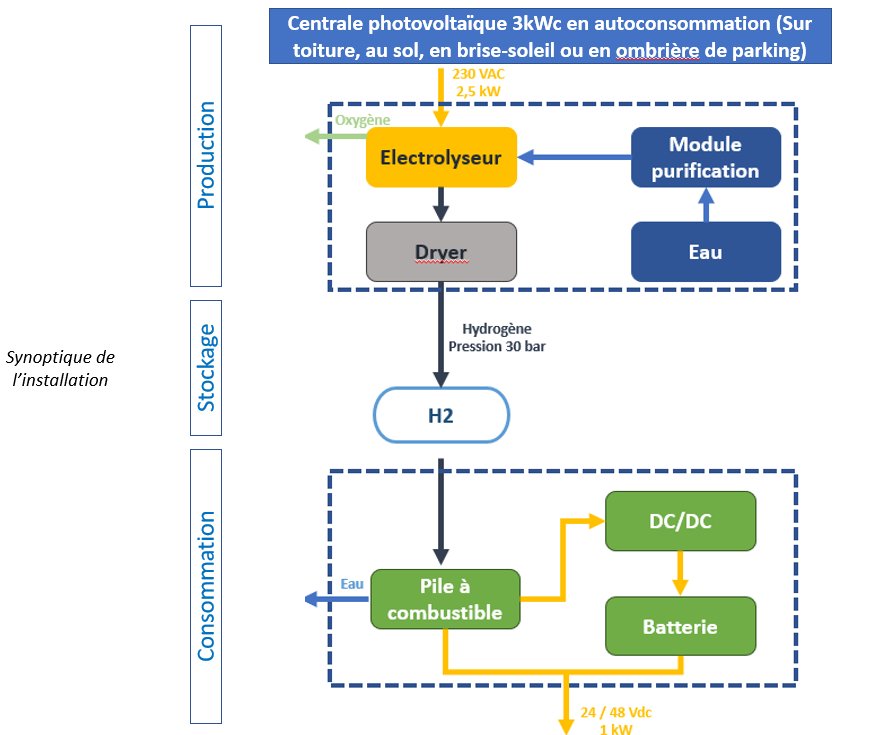
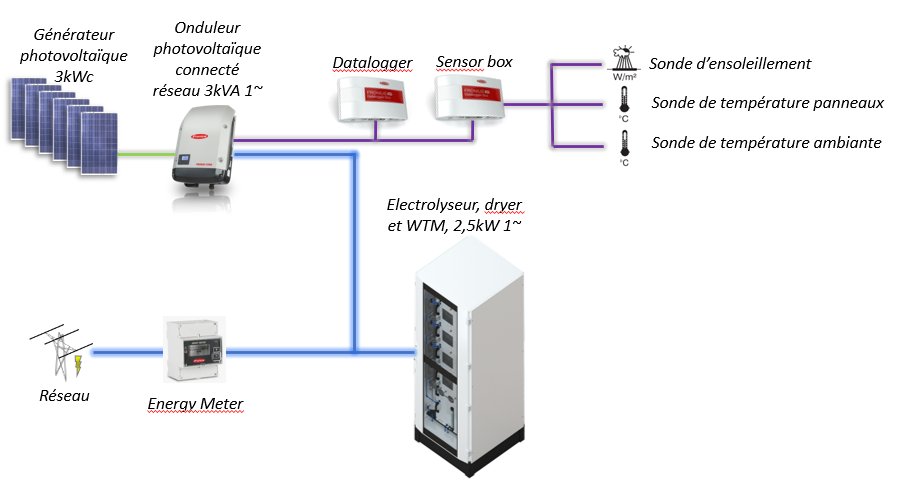
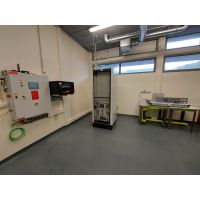
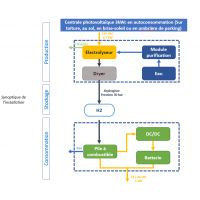
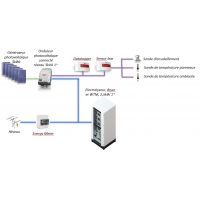
The electrolyzer assembly is based on an industrial solution used mainly for hydrogen production in isolated sites or for autonomous buildings.
It is a stationary solution that can be easily interfaced with a electricity generation system using renewable energies (photovoltaic or wind power).
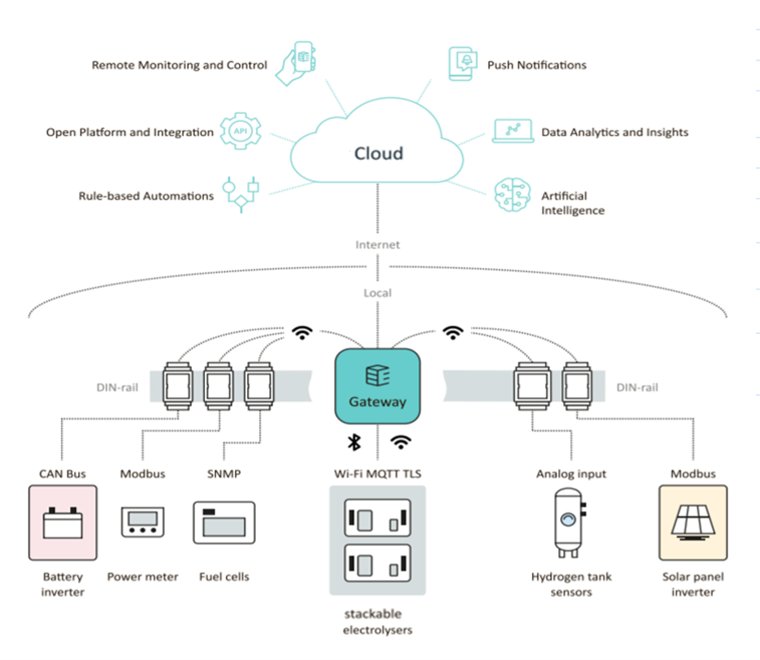
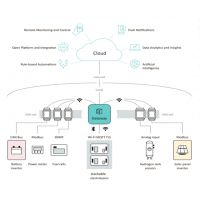
The electrolyzer is supplied with its supervision module—its EMS—which allows remote control of the system from the Modbus TCP/IP interface and collection of operating data.
The user can use a comprehensive web and mobile dashboard providing an overview of the equipment and control of all connected devices.
The electrolyzer can be controlled, and the system can be upgraded according to the educational modules developed by performing comprehensive analyses on the energy system.
The user can program customizable alerts (SMS, emails, or calls) to stay informed about the system's operation. A management system based on usage rules allows you to define and modify the parameters of different components of the energy system that interact automatically.
Communication modules are also available to provide wireless connectivity to solar panels, hydrogen tanks, batteries, digital sensors and analog sensors that can be added (scalable architecture).
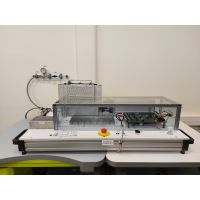
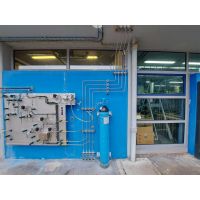
Check valves at the electrolyzer outlet, B20 H2 and B20 N2.
Safety valves at the outlet of the cylinder pressure reducers.
Isolation valves for purging and maintaining the pressure sensors and flow meter.
Power supply for sensors and solenoid valves
Control of solenoid valves via relays
Communication with the hybrid system supervisor
Processing of signals from pressure sensors and flow meter
Display of CES
System safety via a Préventa safety relay
Automatic mode management by a PLC:
−Mode 1: Power supply from B20 -H2
−Mode 2: Power supply from electrolyzer
−Mode 3: Default (automatic switch to N2)
−Mode 4: Maintenance
−Mode 5: Shutdown
Digital communication to the hybrid system supervisor.
Distribution terminal blocks.
System maintenance must be scheduled once a year. It can be integrated into training modules.
This maintenance ensures the reliability of the system when it is restarted and prevents the risk of hydrogen leaks.
| Equipment | Check |
| Hydrogen cylinder | Remaining hydrogen quantity, condition of connections, leak test. |
| Hydrogen hose | Visual inspection of piping, leak tests, replacement if expiration date reached |
| Hydrogen pressure regulator | Replacement of seals, leak test, checking of operating pressures |
| Gas detection system | Test |
| Battery | Check cell voltages, sensors, tightness of electrical connections, and charge status safety devices |
| Fire extinguisher | Check expiration date |
| Mothys system | Functionality test, efficiency and safety checks |
 France Hydrogène