 Return to the range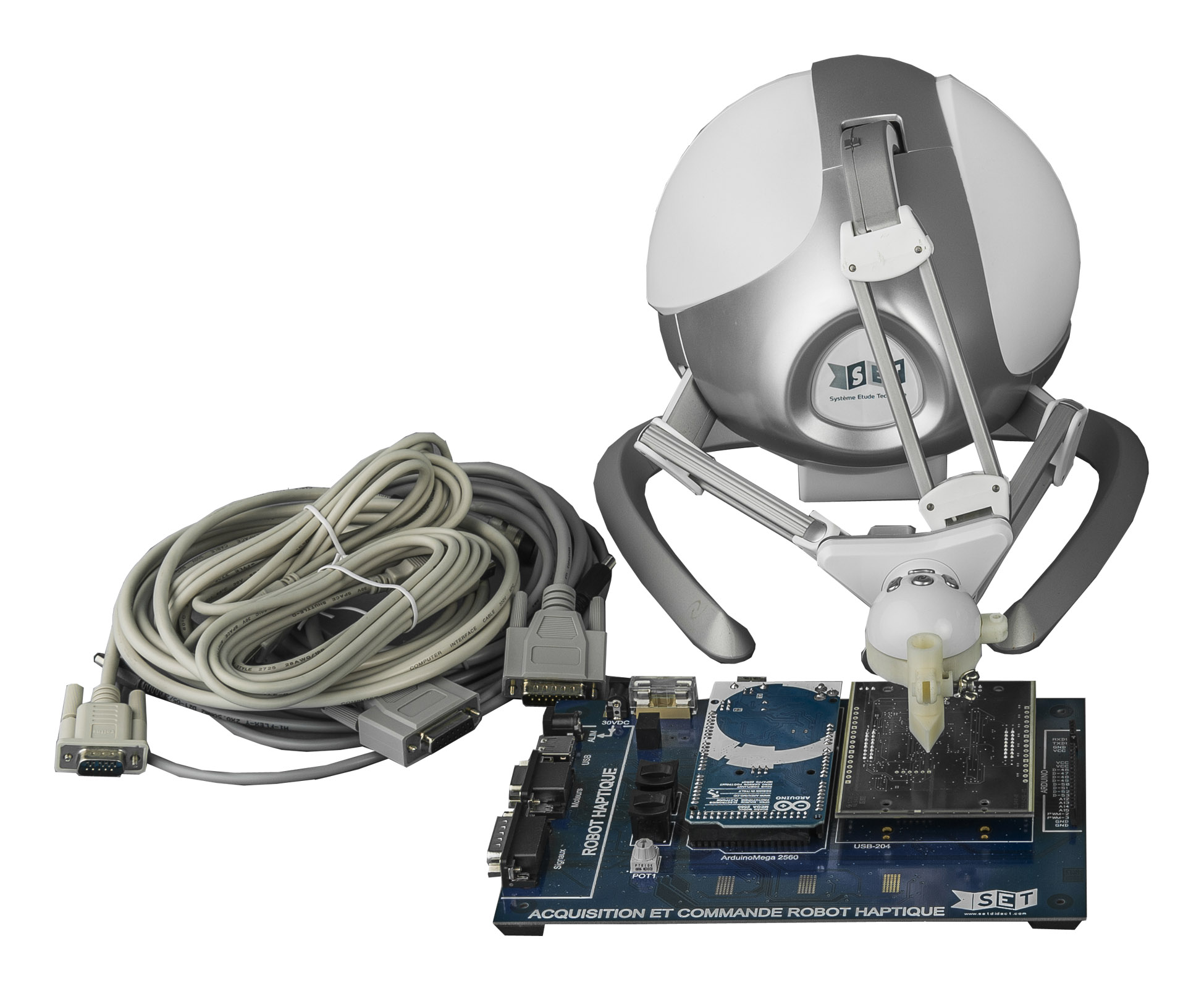
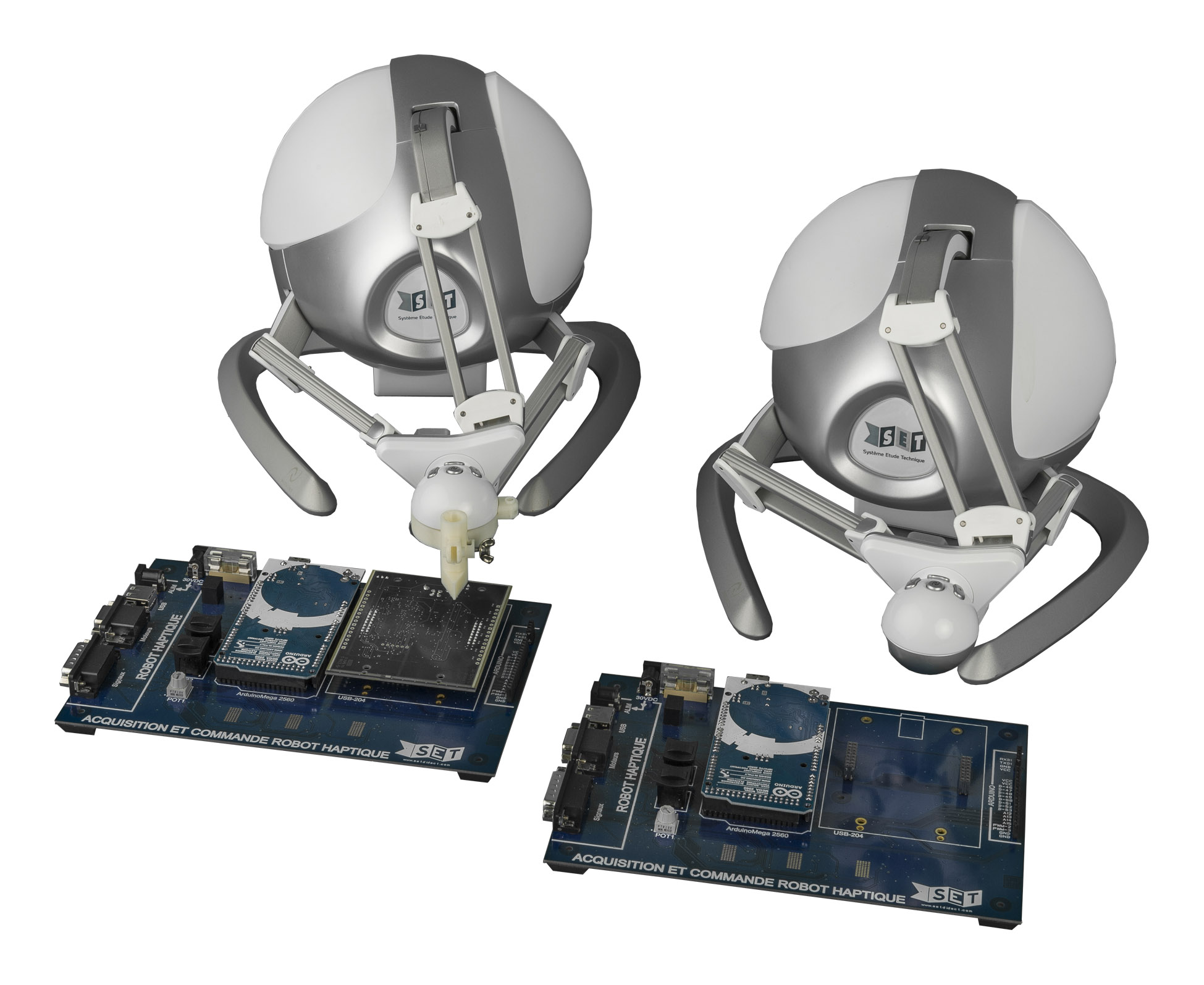
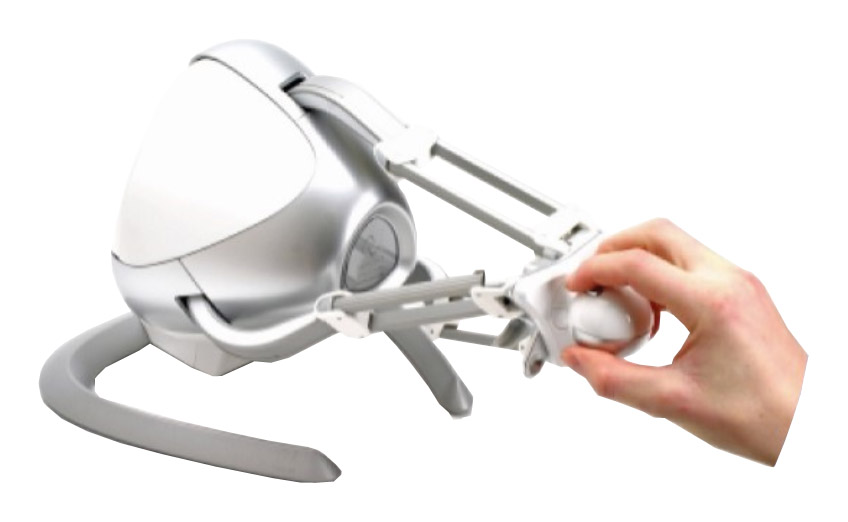
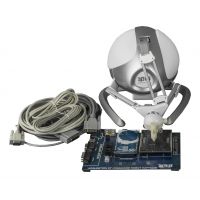
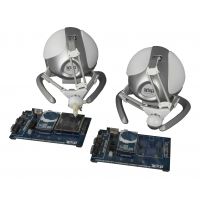
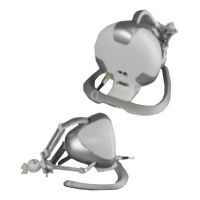
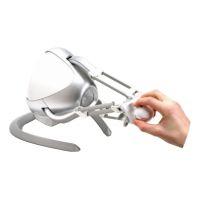
Haptic robots originate from the scientific field of the sense of touch. They are used in the medical field, tele-robotics in hazardous areas, virtual reality gaming, and many other fields.
The educational system incorporates two haptic robots, the first with an integrated acquisition card and measurements for working with Matlab and Labview, and the second equipped with an Arduino card for programming.
Delta robot with parallel structure with three identical closed kinematic chains with three degrees of freedom in translation (working space 101 x 101 x 101 mm)
DC gear motors
Incremental encoders
Integrated acquisition/measurement card
Reprogrammable in-situ Arduino card
The practical work provided enables activities to be carried out on analysis, modeling, and experimentation with measurement of deviations.
The fields of investigation covered are:
Mechanical stresses, deformations, and constraints
The reversibility of a transmission chain
The energy chain with its three motors
The information chain with its three incremental encoders and serial connection to a PC
Servo systems
Digital technology and virtual reality
Possibility of interdisciplinary applications:
Mathematics: Trigonometric functions
Physical and Chemical Sciences: Modeling a mechanical oscillating system
Life and Earth Sciences: The human body, neurons, and muscle fibers
Real educational system enabling the characterization of differences between the desired (manufacturer's data), the model ( and the real
Educational haptic robots can be used in projects (SI, STI2D SIN and ITEC, NSI).
Technical file with SysML description, 3D modeling in SolidWorks, Matlab-Simulink multiphysics model
SHAP: Haptic Robot
SHAP-CPGE: Haptic Robot Set for CPGE Activities
SHAPIO: Haptic Robot with Python Development Kit
SHAPARD: Option: Haptic Robot Project with ARDUINO Board.
SHAP-BM: Option: Haptic robot instrumentation bench for CPGE applications (without robot)
SHAPRS: Option: Non-educational Haptic Robot
 Robot Haptique