 Return to the range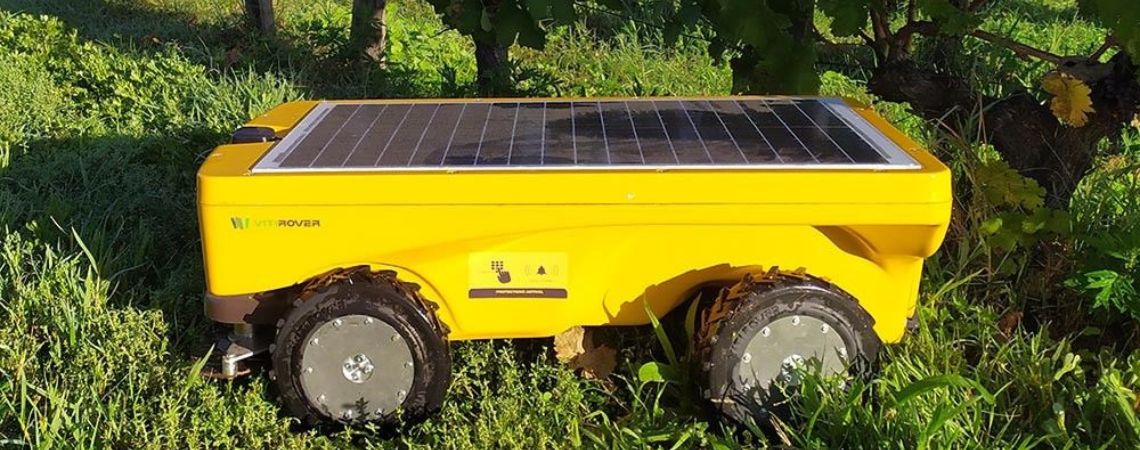
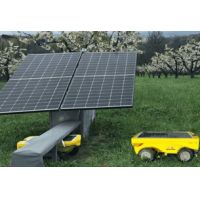
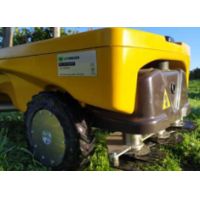
Vitirover
Professional 4x4 Solar-Powered Connected Autonomous Mowing Robot
Professional 4x4 Solar-Powered Connected Autonomous Mowing Robot
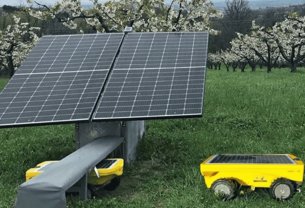
The Vitirover robots, designed and manufactured in France, are revolutionizing the maintenance of agricultural and industrial land. Autonomous, they navigate using GPS and recharge automatically using solar energy.
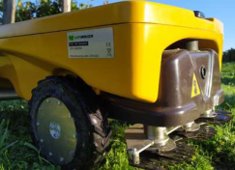
Particularly suited to terrain with multiple obstacles (posts, trees, vines, etc.), they keep vegetation below 10 centimeters in height and cut grass up to 2 centimeters from obstacles.
Areas of application :
- Photovoltaic farms
- Arboriculture & Orchards
- Vineyards
- Railways & Transport
- High-voltage electrical substations, etc.
Vitirover Academ, multidisciplinary teaching system:
allows you to work on a wide range of topics offered by the Vitirover robot for vocational and technological education, from robotics to AI, IoT, solar energy, fog computing, and more.
Topics and technologies covered by Vitirover:
- AI & Machine Learning
- Programming (from No Code to C++)
- Connectivity, IoT, Fog Computing
- Very Low Power Consumption Systems
- Detectors & Binocular RGB Cameras
- Web and SAAS Platforms
- Advanced Mechatronics
- Renewable Energy / Solar Panels
- Rechargeable and Repairable Batteries
- Advanced Navigation Management
- Autonomous 4x4 Vehicles
- Geolocation
- Military or Space Rover Applications
- Robot Fleet Management
• Learning and practicing programming languages (C, C++, Python) or Scratch in a practical way using engaging educational materials
• AI applied to different navigation strategies and obstacle recognition • Matlab model, Gazego simulation, ROS available • Open hardware and software platform ideal for project-based learning • Collaborative community space open to teachers, students, researchers, and experts who want to further their education, research, and development of Vitirover robot features. Mechanical functions: Movement: - 4-wheel drive (gear motor contained in the axle, with Maxxon DC motor) - Steering system, patented by Vitirover, implemented by the rear axle, which, by applying a speed difference, allows the robot to change direction and turn - Rear axle connected to the chassis by an axle connected to the robot chassis by a ball joint ensuring ground contact of the wheels and traction even on rough terrainPositioning and obstacle detection:
- Robot position known thanks to its GNSS (GPS/Galileo/Glonass/Baidu) system with 1 m tolerance. - Precise geolocation with RTK system (1 cm tolerance), requiring connection to a local RTK network (subscription). - Obstacle detection by measuring a peak on the inertial unit, the static GPS position, and peak intensity on the wheel motorsVI//VitiroverAcademy: Vitirover outdoor mobile robot (Academic version)
 Vitirover